Data Breach Response: What to Do Within the First 72 Hours – A Comprehensive Guide

Anúncios
In today’s interconnected digital landscape, a data breach is not a matter of ‘if,’ but ‘when.’ The speed and effectiveness of your organization’s data breach response in the critical first 72 hours can significantly determine the extent of the damage, the financial implications, and the reputational fallout. This comprehensive guide will walk you through the essential steps to take immediately following a data breach, ensuring your organization is prepared to act swiftly and decisively.
Understanding the urgency is paramount. Regulatory bodies worldwide, such as the GDPR in Europe and various state laws in the US, often mandate notification within 72 hours of becoming aware of a breach. Failing to meet these deadlines can result in hefty fines and severe legal repercussions. Beyond compliance, a rapid response helps to contain the breach, prevent further data exfiltration, and begin the process of recovery and rebuilding trust with affected parties.
The Immediate Aftermath: Recognizing a Data Breach
The first step in any effective data breach response is timely detection. Modern threats are sophisticated and often designed to remain undetected for as long as possible. Organizations must invest in robust security monitoring tools, intrusion detection systems (IDS), and security information and event management (SIEM) solutions. Regular security audits, penetration testing, and employee training on identifying suspicious activities are also crucial.
Anúncios
Common Indicators of a Data Breach:
- Unusual network activity or traffic spikes.
- Unauthorized access attempts or successful logins from unknown locations.
- System performance degradation or unexpected shutdowns.
- Suspicious files or processes appearing on systems.
- Alerts from security software or external security researchers.
- Employee reports of phishing attempts or strange emails.
Once an anomaly is detected, it’s vital to have a clear protocol for escalating the issue. Every second counts. Your incident response plan should clearly define who is responsible for initial assessment and who needs to be notified immediately. This often includes the IT security team, legal counsel, and senior management.
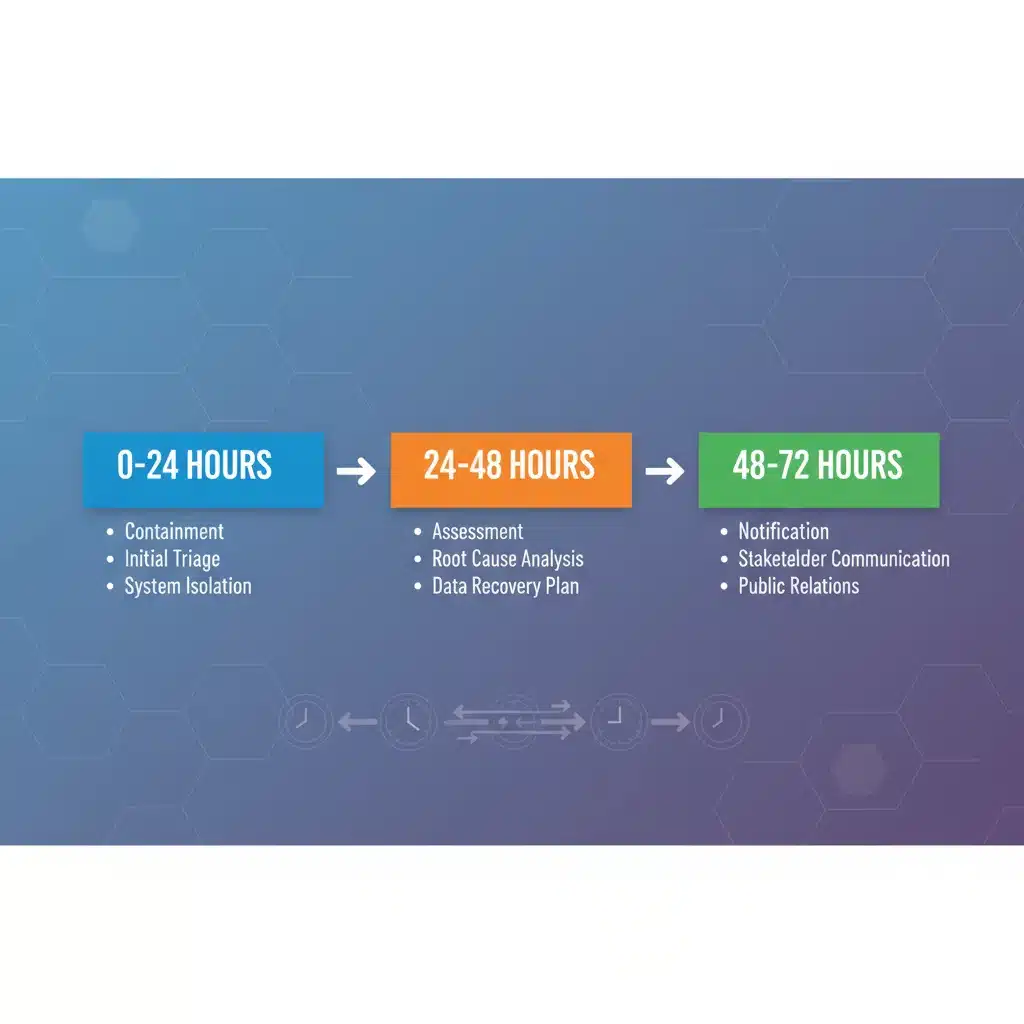
Hour 0-24: Containment and Initial Assessment
The first 24 hours are the most chaotic but also the most critical for your data breach response. The primary goal during this period is to contain the breach to prevent further damage and to begin understanding its scope.
1. Activate Your Incident Response Plan (IRP)
If you don’t have a well-defined Incident Response Plan, now is the time to create one. If you do, activate it immediately. An IRP is a documented procedure for handling security incidents, outlining roles, responsibilities, communication channels, and technical steps. It should be regularly reviewed and updated.
2. Isolate Affected Systems
This is a critical containment step. Disconnect compromised systems from the network, isolate affected segments, and revoke access for potentially compromised accounts. Be careful not to destroy evidence in the process. For example, simply pulling the plug on a server might erase valuable volatile data needed for forensic analysis. Instead, disconnect it from the network while preserving its current state.
3. Preserve Evidence and Begin Forensic Analysis
Forensic analysis is crucial for understanding how the breach occurred, what data was accessed, and who was responsible. Secure logs, system images, and any other relevant data. Engage a qualified cybersecurity forensics team, either internal or external, as quickly as possible. This evidence will be vital for legal proceedings, regulatory compliance, and preventing future breaches.
4. Initial Assessment of Breach Scope
While forensic analysis is ongoing, try to make an initial assessment of:
- What data was compromised? (e.g., personal identifiable information (PII), financial data, intellectual property, health records)
- How many individuals are affected?
- What is the potential impact? (e.g., financial loss, reputational damage, regulatory fines)
5. Internal Communication Protocol
Establish clear internal communication channels. Designate a single point of contact or a small crisis management team to disseminate information. Avoid speculation and ensure all communications are accurate and approved by legal counsel. Employees should know who to report to and what information they can share, if any, externally.
Hour 24-48: Deeper Analysis and Stakeholder Engagement
As the initial chaos subsides, the focus shifts to a more detailed understanding of the breach and preparing for external communications. This phase of your data breach response is about gathering comprehensive information and aligning your strategy.
1. Comprehensive Forensic Analysis Continues
The forensic team will continue to delve deeper, identifying the root cause, the attack vector, the duration of the breach, and the full extent of data exfiltration. This detailed information is essential for both remediation and legal/regulatory reporting.
Anúncios
2. Engage Legal Counsel and Regulatory Experts
Legal counsel should be involved from the outset. They will guide you on legal obligations, potential liabilities, and appropriate communication strategies. If your organization operates internationally, or deals with sensitive data, engaging regulatory experts familiar with GDPR, CCPA, HIPAA, etc., is crucial to ensure compliance with diverse notification requirements.

3. Identify Affected Parties
Based on the forensic analysis, compile a precise list of individuals or entities whose data has been compromised. This includes customers, employees, partners, and vendors. Accurate identification is critical for proper notification and support.
4. Begin Remediation Planning
While containment is ongoing, start planning for remediation. This includes patching vulnerabilities, strengthening security controls, resetting passwords for all affected accounts, and implementing multi-factor authentication (MFA) where possible. Consider whether a complete system rebuild is necessary in severe cases.
5. Prepare Communication Drafts
With legal guidance, begin drafting initial communications. These might include:
- Internal communications: Updates for employees.
- External communications: Press releases, customer notifications, and statements for regulatory bodies.
These drafts should be factual, empathetic, and avoid admitting fault prematurely unless advised by legal counsel. They should also include clear instructions for affected individuals on what steps they can take to protect themselves (e.g., monitoring credit reports, changing passwords).
Hour 48-72: Notification and Mitigation Strategies
The final hours of the critical 72-hour window are dedicated to formal notifications and implementing immediate mitigation strategies. This phase solidifies your data breach response and sets the stage for long-term recovery.
1. Notify Regulatory Authorities
Many regulations, like GDPR, require organizations to notify the relevant supervisory authority within 72 hours of becoming aware of a data breach, unless the breach is unlikely to result in a risk to the rights and freedoms of natural persons. Ensure your notification is accurate, comprehensive, and submitted within the stipulated timeframe.
2. Notify Affected Individuals (If Required)
Depending on the type of data compromised and relevant regulations, you may be required to notify affected individuals directly. This notification should be clear, concise, and provide actionable advice. Offer support services, such as credit monitoring or identity theft protection, if appropriate.
3. Engage Public Relations (PR)
A well-managed PR strategy is crucial for protecting your organization’s reputation. Work with PR professionals to craft messages that are transparent, reassuring, and demonstrate your commitment to resolving the issue and protecting customer data. Be prepared for media inquiries and have spokespersons trained to handle them.
4. Implement Immediate Security Enhancements
Based on the root cause analysis, deploy immediate security enhancements. This might involve:
- Implementing stronger firewall rules.
- Updating intrusion prevention systems (IPS) signatures.
- Deploying new endpoint detection and response (EDR) tools.
- Strengthening access controls and reviewing privileged accounts.
5. Review and Update Your Incident Response Plan
The experience of a real data breach provides invaluable lessons. Use this opportunity to review and refine your Incident Response Plan. Identify weaknesses in your detection, containment, and communication processes. Incorporate new learnings to make your plan more robust for future incidents.
Beyond 72 Hours: Recovery and Long-Term Resilience
While the initial 72 hours are critical, a data breach is not over once notifications are sent. The journey to full recovery and enhanced security is a continuous process. Your data breach response plan should extend well beyond this initial phase.
1. Post-Breach Analysis and Lessons Learned
Conduct a thorough post-mortem analysis. What went well? What could have been done better? Document all findings and create an action plan for implementing improvements across your security posture, policies, and procedures. This is a crucial step for preventing recurrence.
2. Continuous Monitoring and Threat Hunting
After a breach, it’s essential to maintain heightened vigilance. Implement continuous monitoring and proactive threat hunting to ensure that no remnants of the attack remain and that new threats are identified quickly. Attackers often leave backdoors or re-attempt breaches using different methods.
3. Rebuilding Trust and Reputation Management
Restoring trust with customers, partners, and employees is a long-term endeavor. Be transparent about the steps you’ve taken to enhance security. Communicate ongoing efforts and demonstrate a commitment to data protection. Consider offering long-term support services to affected individuals.
4. Employee Training and Awareness
Human error is a significant factor in many data breaches. Reinforce cybersecurity training for all employees, focusing on phishing awareness, strong password practices, and recognizing suspicious activities. A security-aware culture is your first line of defense.
5. Investment in Advanced Security Technologies
Evaluate your current security stack. A breach often highlights gaps that can be addressed by investing in more advanced security technologies, such as AI-driven threat detection, data loss prevention (DLP) solutions, and robust identity and access management (IAM) systems. Proactive investment is far less costly than reactive damage control.
6. Regular Review of Security Policies and Procedures
Cybersecurity is an ever-evolving field. Regularly review and update your security policies, procedures, and incident response plan to adapt to new threats and regulatory changes. This includes data retention policies, access control policies, and vendor security agreements.
The Importance of Preparation: Building a Resilient Organization
The most effective data breach response starts long before a breach occurs. Proactive preparation is the cornerstone of organizational resilience. Here’s how to build a strong foundation:
1. Develop a Comprehensive Incident Response Plan (IRP)
As mentioned, an IRP is non-negotiable. It should be detailed, actionable, and cover all phases of a breach, from detection to recovery. Include contact lists for key personnel, external experts (legal, PR, forensics), and regulatory bodies.
2. Conduct Regular Drills and Tabletop Exercises
A plan is only as good as its execution. Conduct regular drills and tabletop exercises to test your IRP. This helps identify weaknesses, trains your team, and ensures everyone understands their role under pressure. Simulating various breach scenarios can provide invaluable experience.
3. Implement a Layered Security Approach (Defense in Depth)
No single security solution is foolproof. Employ a multi-layered security strategy that includes firewalls, intrusion detection/prevention systems, antivirus/anti-malware, endpoint protection, data encryption, and access controls. This defense-in-depth approach ensures that if one layer is breached, others can still protect your data.
4. Data Backup and Recovery Strategy
Ensure you have robust, regularly tested data backup and recovery procedures. In the event of a ransomware attack or data corruption, reliable backups can be your lifeline, allowing you to restore operations quickly and minimize downtime.
5. Vendor Risk Management
Your supply chain can be a significant attack vector. Implement a strong vendor risk management program to assess the security posture of third-party vendors who have access to your data or systems. Include security clauses in contracts and conduct regular audits.
6. Cyber Insurance
Consider investing in cyber insurance. While it doesn’t prevent a breach, it can help mitigate the financial impact, covering costs related to forensic investigation, legal fees, notification expenses, and reputational damage. Understand the policy’s coverage and exclusions.
Conclusion: Mastering the 72-Hour Window
Navigating a data breach is undoubtedly one of the most challenging events an organization can face. However, by understanding the critical actions required within the first 72 hours and implementing a robust, proactive data breach response plan, you can significantly reduce the impact, maintain compliance, and safeguard your organization’s future. The key is preparation, rapid action, clear communication, and a commitment to continuous improvement in your cybersecurity posture. Don’t wait for a breach to happen; prepare for it today.