
How to File a Complaint with the CFPB: A Step-by-Step Guide for 2026
In an increasingly complex financial landscape, consumers often find themselves facing challenges with banks, lenders, and other financial institutions. When disputes arise, knowing where to turn can make all the difference. The Consumer Financial Protection Bureau (CFPB) stands as a vital federal agency dedicated to protecting consumers in the financial marketplace. If you’ve encountered an issue that you believe violates your rights or is unfair, filing a complaint with the CFPB can be a powerful step towards resolution. This comprehensive CFPB Complaint Guide for 2026 will walk you through every stage of the process, ensuring you are well-equipped to advocate for your financial well-being.
Understanding how to effectively use the CFPB’s complaint system is crucial. It’s not just about voicing a grievance; it’s about providing the agency with the necessary information to investigate your claim and, potentially, help you achieve a satisfactory outcome. This guide aims to demystify the process, from preparing your complaint to understanding the potential resolutions. By following these steps, you can confidently navigate the system and ensure your voice is heard.
What is the CFPB and Why Does It Matter?
The Consumer Financial Protection Bureau (CFPB) is an agency of the United States government responsible for consumer protection in the financial sector. Its jurisdiction includes banks, credit unions, securities firms, payday lenders, mortgage-servicing operations, foreclosure relief services, debt collectors, and other financial companies operating in the United States. Established in the wake of the 2008 financial crisis, the CFPB’s primary goal is to make markets for consumer financial products and services work for Americans—and to empower consumers to take more control over their financial lives.
Anúncios
The CFPB achieves its mission through various means, including enforcing federal consumer financial laws, researching consumer behavior, and educating consumers about financial products and services. One of its most impactful functions is its complaint system. This system allows consumers to report issues they’re experiencing with financial products or services, which helps the CFPB identify trends, hold companies accountable, and resolve individual consumer problems. When you use this CFPB Complaint Guide, you’re not just helping yourself; you’re contributing to a broader effort to ensure fairness and transparency in the financial industry.
For 2026, the CFPB continues to be a critical resource. With new financial products and services constantly emerging, and existing ones evolving, the need for a robust consumer protection agency remains paramount. Staying informed about your rights and the avenues available for recourse, such as the CFPB’s complaint system, is an essential part of modern financial literacy. This guide will help you leverage this powerful tool effectively.
When Should You File a CFPB Complaint?
Before diving into the mechanics of how to file, it’s important to understand when a CFPB complaint is appropriate. The CFPB handles complaints related to a wide range of financial products and services. These include, but are not limited to:
- Mortgages: Issues with loan applications, servicing, escrow, or foreclosure.
- Credit Reporting: Inaccurate information on credit reports, identity theft, or issues with credit repair services.
- Credit Cards: Billing disputes, interest rates, fees, or deceptive marketing.
- Bank Accounts & Services: Unauthorized transactions, fees, account closures, or issues with direct deposits.
- Debt Collection: Harassment, false statements, or attempts to collect debt not owed.
- Student Loans: Servicing issues, repayment plans, or problems with loan discharge.
- Payday Loans, Title Loans, and Installment Loans: Unfair terms, high fees, or aggressive collection practices.
- Money Transfers/Virtual Currency: Problems with sending or receiving money, or issues with digital payment platforms.
- Vehicle Loans/Leases: Issues with financing, repossession, or unfair contract terms.
Generally, you should consider filing a complaint with the CFPB if you have already attempted to resolve the issue directly with the financial company and have not received a satisfactory response, or if the company has been unresponsive. The CFPB is not a substitute for legal advice or a court of law, but it can be an effective intermediary and oversight body. This CFPB Complaint Guide emphasizes the importance of exhausting direct communication with the company first, as it often leads to a quicker resolution.
It’s also important to note that the CFPB generally handles complaints against companies, not individual employees, and focuses on systemic issues or clear violations of consumer financial law. If your issue falls within these categories and you’ve hit a wall with the company, then the CFPB is your next logical step. The effectiveness of your complaint often hinges on its clarity and the supporting documentation you provide, which we will cover next in this CFPB Complaint Guide.
Step 1: Gather Your Information and Documentation
Preparation is key to filing an effective complaint. Before you even visit the CFPB’s website, you need to collect all relevant information and documentation. The more detailed and organized your submission, the better the chances of a swift and favorable resolution. This initial step is critical for any successful CFPB Complaint Guide strategy.
What to Collect:
- Company Information: The full legal name of the company you are complaining about, its address, and any specific department or individual you’ve been dealing with.
- Account Numbers: Any relevant account numbers (e.g., credit card, loan, bank account) related to your complaint.
- Dates and Times: Specific dates and times of events, conversations, or transactions related to your issue.
- Communication Records: Copies of emails, letters, chat transcripts, or notes from phone calls with the company. Include dates, names of representatives, and what was discussed.
- Supporting Documents: This could include bank statements, credit reports, loan agreements, contracts, receipts, advertisements, or any other document that supports your claim. Highlight or annotate the relevant sections.
- Desired Resolution: Clearly define what you believe would be a fair resolution to your issue. Do you want a refund, an account adjustment, an error corrected, or something else?
Organize this information chronologically and logically. Having everything at your fingertips will make the online complaint form much easier to complete and will provide the CFPB and the company with a clear picture of your situation. Remember, the CFPB relies on the accuracy and completeness of the information you provide to properly investigate your complaint. This meticulous data gathering is a cornerstone of this CFPB Complaint Guide.

Step 2: Contact the Company First (If You Haven’t Already)
While not strictly required by the CFPB, it is highly recommended that you attempt to resolve the issue directly with the financial company before filing a formal complaint with the agency. Many issues can be resolved quickly through direct communication, saving you time and effort. This step is a common recommendation in any effective CFPB Complaint Guide.
Anúncios
Tips for Contacting the Company:
- Be Clear and Concise: Clearly explain your problem and what resolution you are seeking.
- Provide Documentation: Have your supporting documents ready to share if requested.
- Keep Records: Document every interaction: who you spoke to, when, what was discussed, and any reference numbers provided. This is crucial if you later need to escalate to the CFPB.
- Follow Up: If you don’t hear back within a reasonable timeframe (e.g., 10-15 business days), follow up politely.
If your direct attempts fail, or if the company’s response is unsatisfactory, you will have a stronger case when you turn to the CFPB. You can include details of your attempts to resolve the issue in your CFPB complaint, demonstrating your good faith efforts. This pre-emptive step strengthens your position and is a vital part of this CFPB Complaint Guide.
Step 3: Access the CFPB Complaint Portal
Once you’ve gathered your information and, if necessary, attempted to resolve the issue directly, it’s time to file your complaint with the CFPB. The easiest and most efficient way to do this is through their online portal. This section of the CFPB Complaint Guide focuses on accessing and navigating the portal.
Go to the official CFPB website (consumerfinance.gov). Look for a prominent link or button labeled something like “Submit a complaint” or “File a complaint.” The website is designed to be user-friendly, but always ensure you are on the legitimate government site to protect your personal information.
Creating an Account:
You will likely be prompted to create an account if you don’t already have one. This is a simple process that usually requires your email address and setting up a password. Creating an account allows you to:
- Save your complaint as a draft and return to it later.
- Track the status of your complaint.
- Receive updates and communicate with the CFPB or the company through the portal.
Having an account is highly recommended as it centralizes all communication and documentation related to your complaint. This digital access streamlines the process outlined in this CFPB Complaint Guide.
Step 4: Fill Out the Online Complaint Form
This is where you provide the details of your complaint. The CFPB’s online form is structured to guide you through the necessary information. Take your time and be as thorough and accurate as possible. This is arguably the most important step in our CFPB Complaint Guide.
Key Sections of the Form:
- Select the Product/Service: Choose the category that best describes your issue (e.g., credit card, mortgage, debt collection).
- Identify the Company: Enter the full legal name of the company. The system may suggest companies as you type.
- Describe Your Problem: This is a free-text field where you explain what happened. Be factual, chronological, and objective. Avoid emotional language. State clearly: what happened, when it happened, who was involved, and what impact it had on you.
- State Your Desired Resolution: Reiterate what you want the company to do to resolve the issue.
- Provide Contact Information: Your personal details so the CFPB and the company can reach you.
- Upload Supporting Documents: Attach all the documents you gathered in Step 1. The portal will usually accept various file formats (PDF, JPG, PNG). Ensure file sizes are within specified limits.
Pro Tip: Draft your complaint description in a separate document (like Word or Google Docs) first. This allows you to review, edit, and refine your statement before pasting it into the online form. Check for clarity, conciseness, and accuracy. A well-articulated complaint significantly increases your chances of a positive outcome, making this a critical piece of advice in this CFPB Complaint Guide.
Step 5: Review and Submit Your Complaint
Before hitting the submit button, thoroughly review your entire complaint. Check for any errors, omissions, or unclear statements. Ensure all your supporting documents are attached and correctly labeled. This final review is a crucial checkpoint in our CFPB Complaint Guide.
Checklist Before Submission:
- Is all company information accurate?
- Is your problem clearly and factually described?
- Is your desired resolution explicitly stated?
- Are all relevant documents attached?
- Is your contact information correct?
Once you are confident that everything is accurate and complete, submit your complaint. You will typically receive a confirmation email with a complaint ID number. Keep this number safe, as it will be your reference for tracking the status of your complaint. This confirmation is your official entry into the system, as detailed in this CFPB Complaint Guide.
Step 6: What Happens After You File? The CFPB Complaint Process
After you submit your complaint, the process moves into several stages. Understanding these stages will help you manage your expectations and know when to follow up. This section of the CFPB Complaint Guide outlines the typical timeline and actions.
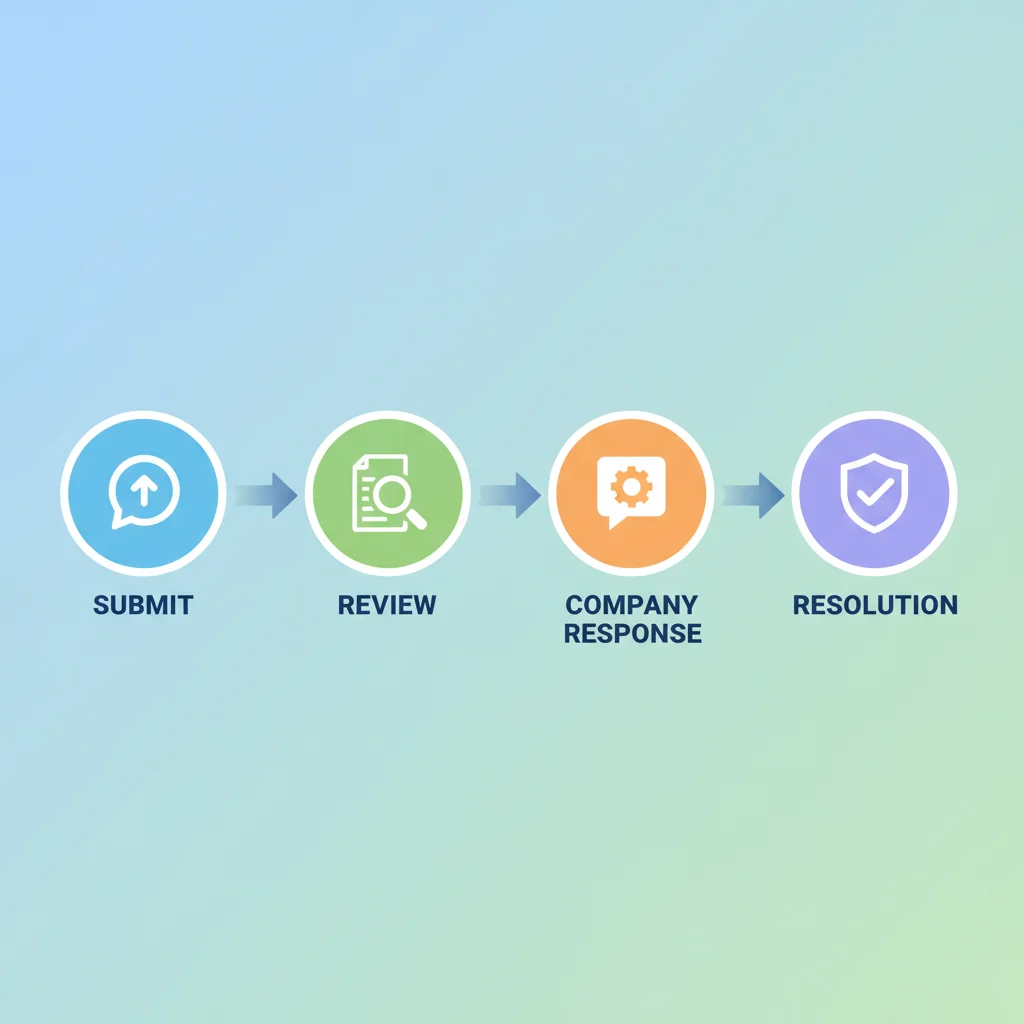
The Process Flow:
- CFPB Review: The CFPB reviews your complaint to ensure it’s complete and within their jurisdiction. They may contact you for additional information or clarification.
- Company Notification: The CFPB sends your complaint to the company you’ve identified, typically within 15 days. The company is then expected to respond to the CFPB and to you, usually within 15 days, explaining how they plan to address your issue. For more complex issues, they may be given up to 60 days.
- Company Response: The company will often respond directly to you and submit their response to the CFPB. This response should explain their side of the story and their proposed resolution.
- Your Review of the Response: You will have the opportunity to review the company’s response through the CFPB portal. You can then provide feedback to the CFPB, indicating whether you agree with the company’s response or if you believe the issue remains unresolved. Your feedback is vital for the CFPB’s assessment.
- CFPB Closing the Complaint: Based on your feedback and the company’s response, the CFPB will close the complaint. Even if the issue isn’t fully resolved to your satisfaction, your complaint and feedback are recorded and contribute to the CFPB’s database, which helps them identify problematic practices.
Throughout this process, it’s essential to monitor your email and the CFPB complaint portal for updates. Respond promptly to any requests for information from the CFPB. Your active participation can significantly impact the outcome, reinforcing the importance of this CFPB Complaint Guide.
Step 7: Understanding Potential Outcomes and Next Steps
Filing a complaint with the CFPB doesn’t guarantee a specific outcome, but it significantly increases the likelihood of your issue being addressed. The potential outcomes can vary, and knowing what to expect can help you plan your next steps. This part of the CFPB Complaint Guide explores these possibilities.
Possible Outcomes:
- Resolution to Your Satisfaction: The company may agree to your desired resolution, offering a refund, adjusting your account, or correcting an error.
- Partial Resolution: The company may offer a compromise that addresses some but not all of your concerns. You will need to decide if this is acceptable.
- Company Explanation: The company may explain their actions and deny your complaint, providing justification for their stance.
- No Resolution: In some cases, the company may not respond or their response may be deemed unsatisfactory by the CFPB, even if you disagree.
What if You’re Not Satisfied?
If you’re not satisfied with the company’s response or the outcome, you still have options:
- Provide Feedback to CFPB: Even if the CFPB closes the complaint, your feedback on the company’s response is crucial. It helps the CFPB track company behavior and identify patterns of misconduct.
- Consider Legal Action: For significant financial disputes, you might consider consulting with a legal professional. An attorney specializing in consumer law can advise you on whether further legal action is warranted.
- State Attorney General: Your state’s Attorney General office may also handle consumer complaints and could be another avenue for recourse.
- Other Regulatory Bodies: Depending on the nature of your complaint, other federal or state regulatory bodies might have jurisdiction (e.g., FDIC, OCC, NCUA for banks and credit unions).
The CFPB’s role is primarily to mediate and oversee, not to adjudicate disputes in the same way a court would. However, their intervention often prompts companies to take consumer complaints more seriously. Your persistence, guided by this CFPB Complaint Guide, can be a powerful force.
Tips for an Effective CFPB Complaint in 2026
To maximize the impact of your complaint and increase your chances of a positive outcome, keep the following tips in mind. These are refined strategies based on years of consumer feedback and CFPB best practices, integral to any comprehensive CFPB Complaint Guide.
- Be Objective and Factual: Stick to the facts. Emotional language, speculation, or personal attacks can detract from the credibility of your complaint.
- Be Concise but Comprehensive: Provide enough detail for the CFPB and the company to understand the issue fully, but avoid unnecessary verbosity. Get straight to the point.
- Organize Your Thoughts: Before writing, outline the key events, dates, and people involved. This helps create a clear and logical narrative.
- Proofread Carefully: Errors in grammar or spelling can make your complaint appear less professional. Read it over several times, or have someone else review it.
- Be Realistic with Your Desired Outcome: While you should state what you want, ensure it’s a reasonable and achievable resolution given the circumstances.
- Keep All Records: Maintain copies of your complaint, all correspondence with the company, and any communication from the CFPB. This paper trail is invaluable.
- Be Patient: The complaint process can take time. While the CFPB aims for timely responses, investigations can be complex.
- Follow Up Appropriately: If you haven’t received updates within the expected timeframe, use the CFPB portal to check the status or send a polite inquiry.
- Understand CFPB’s Limitations: The CFPB cannot act as your personal attorney, nor can they guarantee a specific outcome. Their power lies in oversight, investigation, and enforcement of consumer financial laws.
By adhering to these best practices, you empower yourself and make the most of the CFPB’s resources. This CFPB Complaint Guide is designed to be your roadmap to effective consumer advocacy.
The Broader Impact of Your Complaint
It’s important to recognize that your individual complaint has a significance beyond your personal resolution. Every complaint submitted to the CFPB contributes to a larger database that helps the agency identify trends, pinpoint problematic companies or products, and inform regulatory actions. This collective data is invaluable for consumer protection, making your participation a public service, as highlighted in this CFPB Complaint Guide.
The CFPB publishes anonymized complaint data, providing transparency and allowing the public to see which companies receive the most complaints and for what issues. This public database serves as a deterrent to bad actors and empowers consumers to make more informed choices about financial institutions. By filing a complaint, you are not just seeking justice for yourself; you are also contributing to a fairer financial marketplace for everyone.
In 2026, as financial technologies continue to evolve, the role of consumer feedback becomes even more critical. Your experiences help the CFPB adapt its strategies and regulations to address new challenges effectively. Therefore, do not underestimate the power of your complaint as a tool for systemic change, a core message of this CFPB Complaint Guide.
Conclusion: Empowering Yourself with the CFPB Complaint Guide
Navigating financial disputes can be daunting, but with the right knowledge and tools, you can effectively advocate for your rights. This CFPB Complaint Guide for 2026 has provided you with a detailed, step-by-step approach to filing a complaint with the Consumer Financial Protection Bureau, from initial preparation to understanding potential outcomes.
Remember, the CFPB is a powerful ally in your corner, designed to ensure that financial institutions operate fairly and transparently. By meticulously gathering information, clearly articulating your issue, and diligently following the complaint process, you significantly increase your chances of achieving a satisfactory resolution. More importantly, you contribute to a broader effort to protect consumers and foster a more equitable financial system for all.
Don’t let financial frustrations go unaddressed. Empower yourself with this guide, take action, and make your voice heard. Your financial well-being matters, and the CFPB is there to help you protect it.