Fed Rate Hike: Impact on Your Finances Explained
Anúncios
The financial landscape has once again been reshaped by the Federal Reserve. In its ongoing battle against persistent inflation, the U.S. central bank recently announced another significant interest rate hike, raising the federal funds rate by 0.75%. This move, while expected by many economists, sends ripples throughout the entire economy, directly affecting everything from the cost of borrowing to the returns on your savings. Understanding the nuances of this Fed Rate Hike is not just for financial experts; it’s crucial for every individual and household looking to manage their money effectively in these dynamic times.
For many, the term ‘interest rate hike’ might sound abstract or distant, but its implications are anything but. This decision by the Federal Open Market Committee (FOMC) is a powerful tool designed to cool down an overheating economy by making money more expensive. The hope is that by increasing the cost of borrowing, consumer spending and business investment will slow down, thereby reducing demand and, consequently, inflation. However, this strategy comes with a trade-off, potentially impacting economic growth and, more immediately, your personal financial well-being. This comprehensive guide will delve deep into what this latest Fed Rate Hike means for your savings, loans, mortgages, and investments, providing actionable insights to help you navigate this evolving economic environment.
Understanding the Federal Funds Rate and the Latest Fed Rate Hike
To truly grasp the impact of the recent Fed Rate Hike, it’s essential to understand what the federal funds rate is and how it influences the broader economy. The federal funds rate is the target interest rate set by the Federal Reserve. It’s the rate at which commercial banks borrow and lend their excess reserves to each other overnight. While it might seem like a niche banking term, this rate serves as the benchmark for a multitude of other interest rates throughout the economy.
How the Federal Funds Rate Works
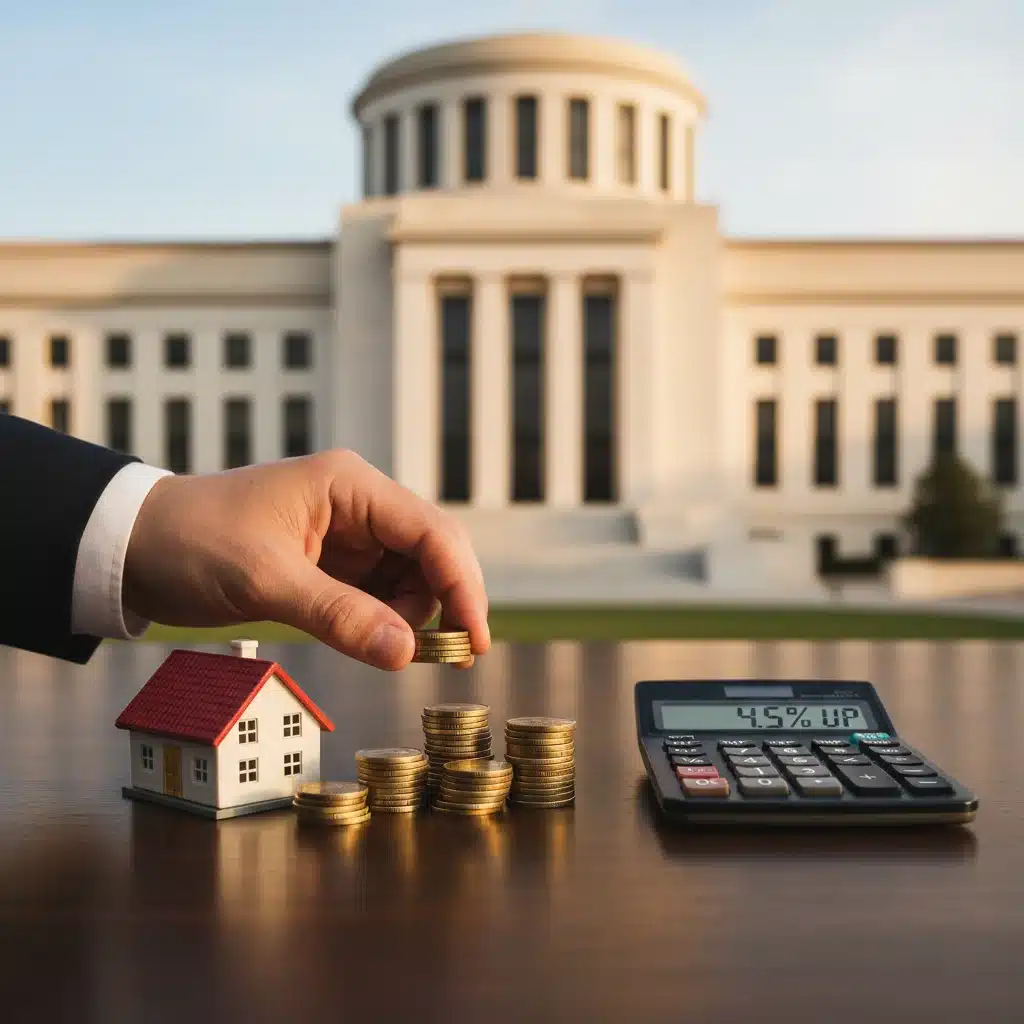
When the Federal Reserve raises the federal funds rate, it essentially makes it more expensive for banks to borrow money. Banks, in turn, pass these higher costs on to their customers in the form of higher interest rates on various loan products, such as mortgages, auto loans, and credit cards. Conversely, when the Fed lowers the rate, borrowing becomes cheaper, stimulating economic activity.
Anúncios
The Rationale Behind the 0.75% Fed Rate Hike
The primary driver behind the recent 0.75% Fed Rate Hike is the Fed’s dual mandate: to achieve maximum employment and maintain price stability. With inflation reaching multi-decade highs, the Fed has been aggressively tightening monetary policy to bring rising prices under control. The hope is that by increasing the cost of borrowing, demand will soften, supply chain pressures will ease, and inflation will eventually recede towards the Fed’s target of 2%.
However, this aggressive approach isn’t without risks. A rapid increase in interest rates can slow economic growth significantly, potentially leading to a recession. The Fed is walking a tightrope, attempting to cool inflation without tipping the economy into a severe downturn. This makes understanding the impact of each Fed Rate Hike even more critical for individuals and businesses alike.
Impact on Your Savings: A Glimmer of Hope?
For years, savers have faced a challenging environment of near-zero interest rates, making it difficult to earn a substantial return on their deposits. The latest Fed Rate Hike, however, offers a potential silver lining for those with money in savings accounts, certificates of deposit (CDs), and money market accounts.
Anúncios
Higher Yields on Savings Accounts and CDs
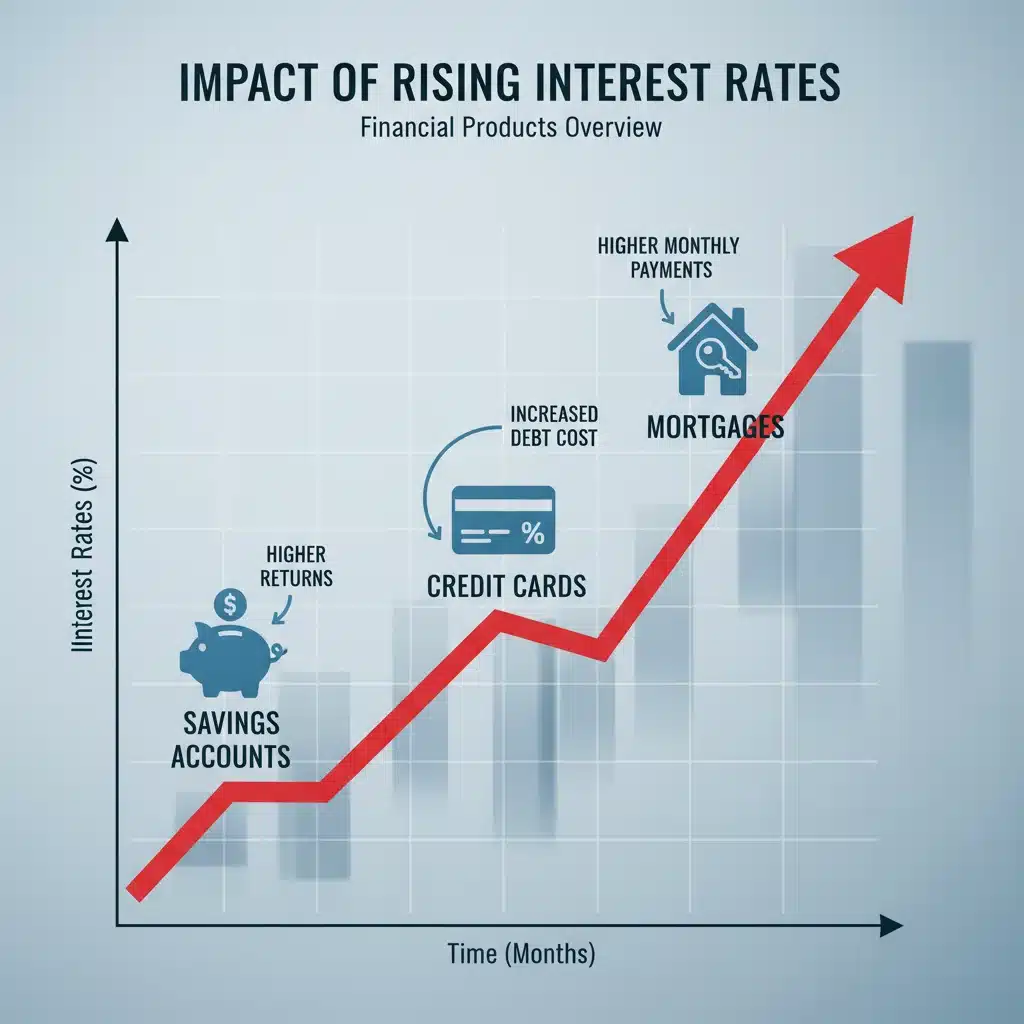
When the federal funds rate increases, banks typically respond by raising the interest rates they offer on savings products. While the increases may not be immediate or perfectly aligned with the Fed’s moves, you can expect to see better yields on your savings accounts, high-yield savings accounts, and CDs. This means your money will work harder for you, earning more interest over time.
It’s important to note that not all banks adjust their rates at the same pace or to the same degree. Online banks and smaller credit unions often lead the way in offering more competitive rates, so it’s a good time to shop around and compare options. Moving your savings to an account with a higher Annual Percentage Yield (APY) can significantly boost your returns, especially in a sustained period of rising rates.
Money Market Accounts and Other Cash Equivalents
Money market accounts, which are a hybrid between checking and savings accounts, also tend to see their yields increase following a Fed Rate Hike. These accounts often offer higher interest rates than traditional savings accounts while still providing easy access to your funds. Similarly, short-term Treasury bills and money market funds, which invest in highly liquid, short-term debt instruments, will also become more attractive as their yields rise.
Strategies for Savers
- Shop Around: Don’t settle for your current bank’s offerings if they’re not competitive. Explore online banks and credit unions.
- Consider CDs: If you have funds you won’t need for a specific period, consider locking in a higher rate with a Certificate of Deposit (CD). Look for ‘CD ladders’ to maintain liquidity.
- High-Yield Savings Accounts: Prioritize moving your emergency fund and other short-term savings into high-yield savings accounts.
- Revisit Your Budget: With potentially higher returns, it’s a good time to re-evaluate your savings goals and allocate more towards them.
While the increased returns on savings are a positive development, it’s crucial to remember that inflation still erodes the purchasing power of your money. Even with higher interest rates, your real return (the return after accounting for inflation) might still be negative if inflation remains elevated. However, a higher nominal return is certainly better than a lower one, making this Fed Rate Hike a beneficial development for dedicated savers.
The Rising Cost of Borrowing: Loans and Mortgages
The most direct and often most impactful consequence of a Fed Rate Hike for consumers is the increased cost of borrowing. This affects a wide array of financial products, from credit cards and auto loans to personal loans and, most significantly, mortgages.
Mortgage Rates Take Flight
Mortgage rates are particularly sensitive to changes in the federal funds rate, though they don’t move in lockstep. Long-term mortgage rates are more closely tied to the yield on 10-year Treasury bonds, which are influenced by the Fed’s actions and inflation expectations. The recent Fed Rate Hike has pushed mortgage rates significantly higher, making homeownership more expensive for prospective buyers and those looking to refinance.
For those with adjustable-rate mortgages (ARMs), the impact can be immediate and substantial. As the underlying index to which their rates are tied increases, their monthly payments will rise. If you have an ARM, it’s crucial to understand your adjustment period and cap limits to anticipate potential increases.
Prospective homebuyers face higher monthly payments, which can reduce their purchasing power and affordability. This might lead to a cooling in the housing market, which has seen unprecedented growth in recent years. If you were planning to buy a home, it’s imperative to factor in these higher rates into your budget and qualification criteria.
Credit Card Debt Becomes Costlier
Credit card interest rates are almost always variable and directly tied to the prime rate, which moves with the federal funds rate. This means that every Fed Rate Hike translates fairly quickly into higher interest charges on outstanding credit card balances. If you carry a balance month-to-month, you’ll be paying more for the privilege of borrowing.
This makes it even more crucial to pay down high-interest credit card debt. The longer you carry a balance, the more expensive it becomes. Consider strategies like balance transfers to cards with promotional 0% APR periods, or consolidating debt into a lower-interest personal loan, though personal loan rates will also be higher now.
Auto Loans and Personal Loans
New auto loans and personal loans will also see higher interest rates. While the increase might not be as dramatic percentage-wise as on credit cards, it can still add a significant amount to your monthly payments over the life of the loan. If you’re in the market for a new car or need a personal loan, expect to pay more in interest compared to a few months ago.
Strategies for Borrowers
- Prioritize High-Interest Debt: Focus on paying down credit card balances and other variable-rate debts first.
- Refinancing Considerations: If you have an adjustable-rate mortgage, evaluate whether refinancing into a fixed-rate mortgage is still viable, even at higher rates, to lock in predictability.
- Budget for Higher Payments: For existing variable-rate loans, adjust your budget to accommodate potential payment increases.
- Shop for Rates: When taking out new loans (auto, personal), compare offers from multiple lenders to secure the best possible rate.
The rising cost of borrowing is a significant challenge for many households. Prudent financial planning and proactive debt management are more important than ever in this environment shaped by the ongoing Fed Rate Hike cycle.
Navigating the Investment Landscape After a Fed Rate Hike
The investment world is highly sensitive to interest rate changes. A Fed Rate Hike can have diverse and sometimes counterintuitive effects on different asset classes. Understanding these dynamics is key to adjusting your investment strategy.
Equities (Stocks)
Rising interest rates generally create headwinds for the stock market. Here’s why:
- Higher Borrowing Costs for Companies: Businesses that rely on borrowing to fund operations, expansion, or share buybacks will face higher interest expenses, which can eat into their profits.
- Reduced Consumer Spending: As borrowing becomes more expensive for consumers (mortgages, credit cards), their discretionary spending might decrease, impacting company revenues and profits.
- Discounting Future Earnings: Higher interest rates are used to discount future corporate earnings when valuing stocks. A higher discount rate means future earnings are worth less today, potentially leading to lower stock valuations.
- Alternative Investments: As bond yields rise, they become more attractive relative to stocks, especially for investors seeking income or lower risk. This can draw money away from the stock market.
However, not all stocks are affected equally. Companies with strong balance sheets, low debt, and consistent cash flows may be more resilient. Value stocks, which are often less sensitive to interest rate changes than growth stocks, might also perform relatively better. Sectors like financials (banks, insurance companies) can sometimes benefit from higher net interest margins in a rising rate environment.
Fixed Income (Bonds)
For existing bondholders, a Fed Rate Hike is generally bad news. When interest rates rise, the market value of existing bonds with lower fixed interest rates falls. This is because newly issued bonds offer higher yields, making older bonds less attractive. If you hold bonds to maturity, you’ll still receive your principal back, but if you need to sell before maturity, you might incur a loss.
However, for new bond investors, rising rates present an opportunity. You can now purchase new bonds with higher yields, locking in better income streams. Short-term bonds tend to be less volatile than long-term bonds in a rising rate environment, making them a potentially safer option.
Real Estate Investment Trusts (REITs)
REITs, which are companies that own, operate, or finance income-generating real estate, can be a mixed bag. On one hand, higher interest rates can increase borrowing costs for REITs, impacting their profitability and ability to acquire new properties. On the other hand, certain types of REITs, especially those with long-term leases and strong tenant demand, might be able to pass on higher costs through rent increases, maintaining their appeal as income-generating assets.
Alternative Investments and Cash
In a rising rate environment, cash and cash equivalents become more attractive due to higher yields on savings accounts and money market funds. This provides a safer haven for capital while investors assess market volatility. Commodities, like gold, can also act as an inflation hedge, though their performance can be influenced by many factors beyond interest rates.

Strategies for Investors
- Review Your Portfolio: Assess your asset allocation and risk tolerance. Consider if your portfolio is appropriately positioned for a rising rate environment.
- Focus on Quality: In equities, favor companies with strong fundamentals, healthy balance sheets, and consistent earnings.
- Shorten Bond Duration: If you hold bonds, consider shortening the duration of your bond holdings or investing in floating-rate bonds to mitigate interest rate risk.
- Dollar-Cost Averaging: Continue to invest regularly through dollar-cost averaging to mitigate the impact of market volatility.
- Rebalance Regularly: Stick to your long-term investment plan and rebalance your portfolio periodically to maintain your desired asset allocation.
The investment landscape is complex, and the impact of a Fed Rate Hike is multifaceted. It’s crucial to avoid making rash decisions based on short-term market fluctuations and instead focus on a well-thought-out, long-term investment strategy.
Broader Economic Implications of the Fed Rate Hike
Beyond individual finances, the Fed Rate Hike has significant implications for the broader economy, influencing everything from the job market to international trade.
Inflation Control vs. Recession Risk
The Fed’s primary goal with these rate hikes is to bring inflation under control. By increasing the cost of borrowing and slowing down demand, they aim to reduce price pressures. However, there’s a delicate balance. Too aggressive a tightening, or a series of rapid hikes, increases the risk of pushing the economy into a recession, characterized by widespread job losses and negative economic growth. The ongoing debate among economists revolves around whether the Fed can achieve a ‘soft landing’ – curbing inflation without triggering a severe downturn.
The Job Market
A slowing economy typically leads to a cooling labor market. Companies might slow down hiring, reduce expansion plans, or even resort to layoffs if demand significantly drops. While a slight moderation in the job market might be seen as necessary by the Fed to reduce wage pressures, a sharp increase in unemployment would be a significant concern.
Consumer Spending and Business Investment
Higher interest rates discourage both consumers and businesses from taking on new debt. This can lead to a decrease in consumer spending on big-ticket items like cars and homes, and a reduction in business investment in new equipment, facilities, and research and development. This slowdown in spending and investment is precisely what the Fed aims for to reduce inflationary pressures, but it also means slower economic growth.
The U.S. Dollar and International Trade
A higher federal funds rate typically makes U.S. assets more attractive to foreign investors, leading to increased demand for the U.S. dollar. A stronger dollar makes U.S. exports more expensive for other countries to buy, potentially hurting export-oriented industries. Conversely, it makes imports cheaper for U.S. consumers, which can help to some extent in curbing inflation by reducing the cost of imported goods. However, a very strong dollar can also create financial instability in other countries, particularly those with dollar-denominated debt.
Government Debt
The U.S. government itself is a massive borrower. As interest rates rise, the cost of servicing the national debt increases. This means a larger portion of the federal budget must be allocated to interest payments, potentially reducing funds available for other government programs and investments.
The ripple effects of a Fed Rate Hike are far-reaching and complex. They touch every corner of the economy, creating both challenges and opportunities. Staying informed about these broader trends can help you make more informed personal financial decisions.
Strategies for Personal Financial Resilience in a Rising Rate Environment
Given the ongoing series of Fed Rate Hike decisions, it’s more important than ever to be proactive and strategic with your personal finances. Here are some overarching strategies to build resilience and potentially even thrive in this environment:
1. Aggressively Pay Down High-Interest, Variable-Rate Debt
This is arguably the most crucial step. Credit card debt, variable-rate personal loans, and even some home equity lines of credit (HELOCs) will become increasingly expensive with each Fed Rate Hike. Prioritize paying these down as quickly as possible to free up cash flow and reduce your interest burden. Consider the ‘debt snowball’ or ‘debt avalanche’ methods to tackle your debts efficiently.
2. Optimize Your Savings
Don’t let your cash sit in a low-yield traditional savings account. Seek out high-yield savings accounts, money market accounts, or short-term CDs that offer more competitive rates. While inflation may still outpace these returns, every extra dollar earned helps preserve your purchasing power. Ensure your emergency fund is adequately stocked in an accessible, high-yield savings account.
3. Review and Rebalance Your Investment Portfolio
Work with a financial advisor to ensure your investment strategy aligns with your long-term goals and risk tolerance in the current economic climate. Consider diversifying your portfolio, potentially increasing exposure to less interest-rate-sensitive assets or those that historically perform well during inflationary periods. Don’t panic sell; instead, focus on your long-term plan and use dollar-cost averaging to your advantage.
4. Lock in Fixed Rates Where Possible
If you’re considering a major purchase that requires financing, like a car, or if you have an adjustable-rate mortgage, evaluate the benefit of locking in a fixed interest rate now. While current fixed rates may be higher than they were a year ago, they offer predictability and protect you from future rate increases. This is a critical consideration after a significant Fed Rate Hike.
5. Build and Maintain a Robust Emergency Fund
Economic uncertainty, coupled with rising costs, makes an emergency fund more vital than ever. Aim for at least 3-6 months’ worth of essential living expenses, preferably in an easily accessible, high-yield savings account. This fund provides a financial safety net against unexpected job loss, medical emergencies, or unforeseen expenses.
6. Focus on Income and Budgeting
In an environment of rising costs, enhancing your income and meticulously managing your budget become paramount. Explore opportunities for side hustles, skill development, or salary negotiations. On the budgeting front, track your expenses diligently, identify areas where you can cut back, and ensure your spending aligns with your financial goals. Every dollar saved or earned helps offset the impact of inflation and higher interest rates.
7. Stay Informed and Adapt
The economic environment is constantly evolving. Keep abreast of upcoming Fed announcements, inflation reports, and economic forecasts. While you shouldn’t make impulsive decisions, being informed allows you to anticipate potential shifts and adapt your financial strategy accordingly. The impact of each Fed Rate Hike is a moving target, so flexibility is key.
Conclusion: Navigating the New Financial Landscape After the Fed Rate Hike
The Federal Reserve’s latest 0.75% Fed Rate Hike is a significant event with far-reaching consequences for every aspect of your personal finances. From the modest gains you might see in your savings accounts to the higher costs associated with mortgages, credit cards, and new loans, the impact is undeniable. The investment landscape also shifts, presenting both challenges for existing portfolios and opportunities for strategic adjustments.
While the immediate future might bring continued economic uncertainty, understanding these changes empowers you to make informed decisions. By proactively managing your debt, optimizing your savings, strategically reviewing your investments, and maintaining a vigilant eye on your budget, you can navigate this rising interest rate environment with greater confidence and resilience. The goal isn’t just to survive these economic shifts but to position yourself to thrive, ensuring your financial well-being remains strong despite the challenges posed by the ongoing battle against inflation and the Fed’s determined actions.